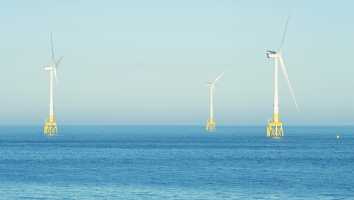
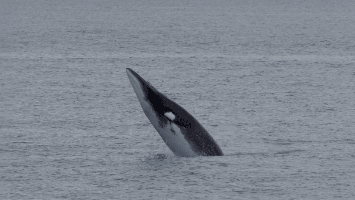
We help developers identify environmental constraints, sensitivities and evidence gaps at an early stage to inform site selection and project design. We assess existing evidence, define proportionate survey and modelling requirements, and investigate site-specific environmental questions to support a robust route to consent.
How we can help:
- Environmental constraints assessment
- Site selection and environmental input to project design
- Environmental input for cable routes and offshore substations
- Marine mammal assessment
- Benthic ecology and habitat assessment
- Oceanographic modelling
- Active acoustic assessment
- Stakeholder engagement and social research
- Baseline survey scoping and design
We provide specialist environmental evidence to support offshore wind consent applications. Our work covers assessing potential effects on marine mammals and marine ecology, providing specialist technical input to Environmental Impact Assessment (EIA) and Habitats Regulations Appraisal (HRA), and responding to evidence gaps or regulatory questions. We also advise on proportionate mitigation, monitoring and protected species licensing requirements.
How we can help:
- Marine mammal and marine ecology impact assessment, including EIA chapter preparation
- Marine mammal and marine ecology evidence to inform HRA
- Protected species license applications
- Underwater noise modelling and assessment
- Oceanographic modelling
- Environmental evidence review, interpretation and gap analysis
- Targeted analysis to address technical or regulatory questions
- Mitigation and monitoring advice
We help developers turn consent conditions and assessment commitments into practical monitoring and mitigation programmes. Our specialists establish robust baselines, refine survey designs and define methods for measuring environmental change during construction and operation. This provides consistent evidence to assess project effects and the performance of mitigation measures.
How we can help:
- Baseline environmental monitoring
- Consent-condition review and monitoring strategy
- Survey design and sampling plans
- Marine mammal baseline monitoring
- Benthic habitat and biodiversity surveys
- Passive acoustic monitoring design
- Underwater sound monitoring plans
- Environmental image analysis
- Mitigation planning and monitoring protocols
- Data management and analysis plans
During construction, we provide monitoring and scientific interpretation to compare observed environmental responses with assessment predictions, consent conditions and monitoring commitments. This helps project teams identify unexpected changes, review mitigation measures and provide clear evidence where further action is required.
How we can help:
- Passive acoustic monitoring for marine mammal detection and relative abundance
- Underwater acoustic monitoring and data analysis
- Behaviour and impact monitoring
- Interpretation of construction-phase monitoring data
- Review of monitoring results and mitigation performance
- Technical reporting and scientific advice
We help operators build a long-term picture of environmental change and ecological interactions around offshore wind infrastructure through site-based, remote and real-time monitoring. By comparing operational evidence with baseline conditions and assessment predictions, we can identify changing patterns, investigate unexpected findings and support ongoing environmental management.
How we can help:
- Long-term environmental monitoring
- Remote and real-time environmental monitoring using drones, robotics and sensors
- Marine mammal monitoring
- Monitoring of animal interactions and encounter- or entanglement risks
- Benthic habitat and biodiversity assessment
- Oceanographic and wake-effect modelling
- Operational device-noise characterisation
- Marine growth, biofouling and biomass assessment using image analysis and 3D photogrammetry
- Non-native species assessment
- eDNA surveys and analysis
- Environmental data analysis and interpretation
We provide environmental evidence to support decisions on extending the operating life of, or decommissioning, offshore wind infrastructure. Our specialists establish pre-removal environmental conditions, characterise the ecology associated with operational assets, assess the potential effects of infrastructure removal and develop proportionate approaches to post-decommissioning monitoring.
How we can help:
- Environmental evidence for licence modifications and operating-life extensions
- Pre-removal baseline surveys of surrounding habitats and seabed
- Assessment of the environmental effects of infrastructure removal
- Ecological characterisation of offshore infrastructure
- Marine growth and biomass assessment using AI-based image analysis, 3D photogrammetry and machine learning
- Non-native species assessment
- Benthic habitat and biodiversity assessment
- Active acoustic assessment
- Post-decommissioning environmental monitoring
- Underwater sound monitoring plans
We support offshore wind developers in identifying measures to avoid and minimise impacts, enhance marine biodiversity and, where required, develop compensatory and restoration measures. From early feasibility and planning through long-term monitoring, we provide the ecological evidence needed to select suitable measures, establish clear objectives and assess environmental outcomes.
How we can help:
- Marine Net Gain, biodiversity enhancement and marine enhancement advice
- Compensatory plan development and scientific input
- Restoration feasibility assessments
- Site selection and baseline ecological assessment
- Ecological modelling to inform restoration, enhancement and compensation measures
- Restoration and enhancement planning and design
- Habitat and species assessment
- eDNA and biodiversity surveys
- Pressure reduction and site protection
- Environmental input to nature-inclusive infrastructure design
- Long-term monitoring of restoration, enhancement and compensation outcomes
- Assessment of ecosystem recovery
- Stakeholder engagement and social sustainability planning
We work with offshore wind developers, regulators and research partners to investigate environmental questions where further evidence is needed. Collaborative projects combine industry experience with expertise across the Scottish Association for Marine Science (SAMS), helping close evidence gaps and turn research findings into practical evidence, methods, and guidance for offshore wind projects.
How we can help:
- Applied research into emerging offshore wind impacts
- Investigation of environmental evidence gaps
- Research into marine wildlife responses to offshore activities and underwater sound
- Development of new environmental monitoring and assessment methods
- Industry, regulatory and academic research partnerships
- Research design, data collection and scientific analysis
- Collaborative evidence programmes and public funding applications
- Translation of research findings into practical evidence, methods and guidance
We work with technology developers and offshore wind partners to develop, test and evaluate technologies for environmental assessment and monitoring. Our specialists can help define the environmental application, design marine trials and determine whether new systems produce reliable, useful data.
How we can help:
- Scientific input to environmental monitoring technology development
- Trial design, validation criteria and performance assessment
- Design and delivery of field trials in marine environments
- Testing and validation of environmental monitoring systems
- Testing and evaluation of robotics, autonomous platforms and remote-sensing systems
- Development and validation of AI-assisted detection and image-analysis methods
- Development and validation of data-analysis methods
- Biological reference data and ground-truthing for new monitoring methods
- Scientific evaluation and interpretation of trial data
We provide regulators and statutory bodies with independent scientific advice for offshore wind licensing, policy and environmental decisions. Alongside reviewing and interpreting existing evidence, we undertake targeted research to address emerging regulatory questions, evidence gaps and areas of uncertainty.
How we can help:
- Independent review and interpretation of environmental evidence
- Technical review of marine mammal and marine ecology evidence for EIA and HRA
- Evidence-gap and uncertainty assessment
- Research design and commissioning support for priority evidence needs
- Targeted research into emerging regulatory questions
- Analysis and interpretation of environmental monitoring results
- Review of mitigation and monitoring proposals
- Independent evaluation of new monitoring and assessment methods
- Scientific advice to inform license conditions and modifications/li>
- Scientific evidence and advice to inform policy and guidance
- Independent technical reporting and expert advice
- Development and delivery of regulatory evidence programmes