
Combining high-resolution sensing, active heating, onboard data storage and satellite communications, SIMBA supports continuous measurements throughout long-term deployments. SIMBA can be configured for different environments, measurement depths and project requirements. Where additional development is required, tailored sensing and deployment solutions can be scoped with the SIMBA technical team.
SIMBA can be configured for different monitoring environments, measurement depths and deployment requirements. Our technical team supports customers from initial system configuration through to deployment, operation and maintenance. The specifications below describe the standard system and available configuration options.
| Specification | Details |
|---|---|
| Environmental protection | Peli case rated to IP67; system housings rated to IP66 |
| Component temperature rating | Rated to −40°C / −40°F. SIMBA has operated below this temperature (−65°C / −85°F) |
| Data storage | Onboard SD-card storage at the deployment site, with remote access and secure data archiving through the web interface |
| Remote communications | Iridium satellite or mobile network (LTE-M) |
| Battery life | More than one year, depending on configuration and sampling schedule External power options available upon request |
| Longest recorded deployment | 23 months |
| Positioning | GPS for location and sea-ice drift monitoring |
| Stated GPS accuracy | 2 m / 6.6 ft |
| Additional measurements | Case temperature, barometric pressure, acceleration, tilt and magnetic heading Selected SDI-12 sensors, including weather stations, pyranometers, snow-depth sensors and anemometers Other sensor options available upon request |
| Sampling | User-configurable sampling rates |
| Remote configuration | Selected settings can be changed remotely after deployment |
| Specification | Details |
|---|---|
| Standard chain (12 mm / 0.47 in width) | 4.8 m / 15 ft 9 in with 240 sensors at 2 cm / 0.8 in spacing |
| Number of chains | Up to 2 thermistor chains per unit |
| Alternative spacing | 5 cm / 2.0 in spacing 10 cm / 3.9 in spacing 25 cm / 9.8 in spacing 50 cm / 19.7 in spacing |
| Other configurations | Alternative sensor spacing available as a tailored option |
| Wide chain (40mm / 1.57 in width) | 2 cm / 0.8 in sensor spacing; maximum length 5.5 m / 18 ft Wide chains have a wide blank section, designed to be clamped to a supporting structure |
| Maximum number of sensors | 300, depending on chain length and sensor spacing |
| Hybrid configuration | Available for specialist applications |
| Included with each chain | Chain weight and separate ambient-air temperature sensor |
| Sensor accuracy | ±0.0625°C / ±0.1125°F |
| Active sensing | Heating and cooling cycles support profiling of the thermal properties of snow and ice |
| Sampling configuration | User configurable |
| Feature | Details |
|---|---|
| Data visualisation | GPS data, chain temperatures, heat maps, environmental sensor, and unit-status information |
| Data download | Decoded raw data available in CSV format |
| Data archive | Data archived through the SIMBA web interface service |
| Customer support | Access to system information supports remote technical assistance |
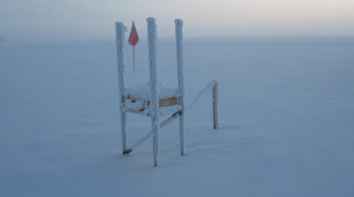
Photo credit: FMI
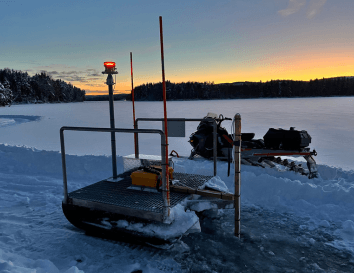
Photo credit: Uniper
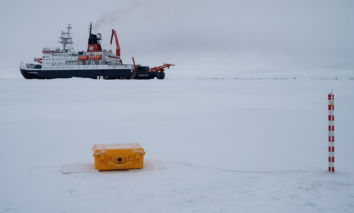
Photo credit: MOSAiC Expedition
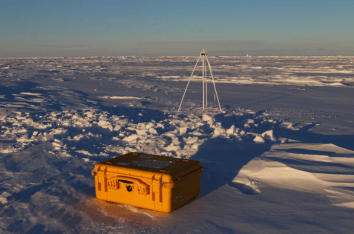
Photo credit: AWI-Meereisportal
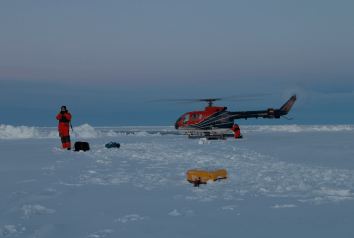
Photo credit: AWI-Meereisportal
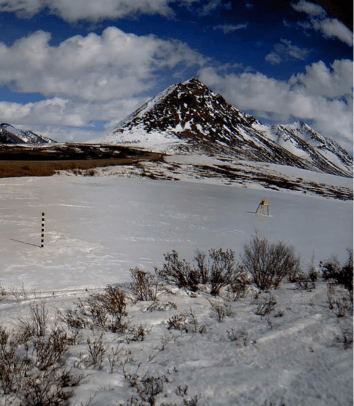
Photo credit: Yukon University
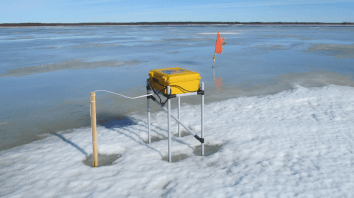
Photo credit: FMI
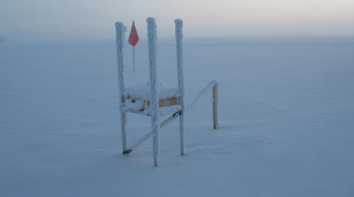
The ICECAPS-ACE project is an international scientific research programme based at Summit Station, Greenland. As part of this work, two Snow Ice Mass Balance Apparatus (SIMBA) units were deployed to provide high-resolution temperature measurements across the snow-air transition zone. The measurements collected by the SIMBA units form part of the wider observational programme and are published by the Centre for Environmental Data Analysis (CEDA).
When storm-force winds prevented observations at higher elevations in the Northern Cairngorms, forecasters used remotely transmitted SIMBA data to examine changes in snow temperature, depth and structure. The data provided additional evidence until conditions allowed field observations to resume.
